

Table of Contents
ToggleINTRODUCTION
Call Center Headsets: The Complete Guide for BPOs and Customer Support Teams
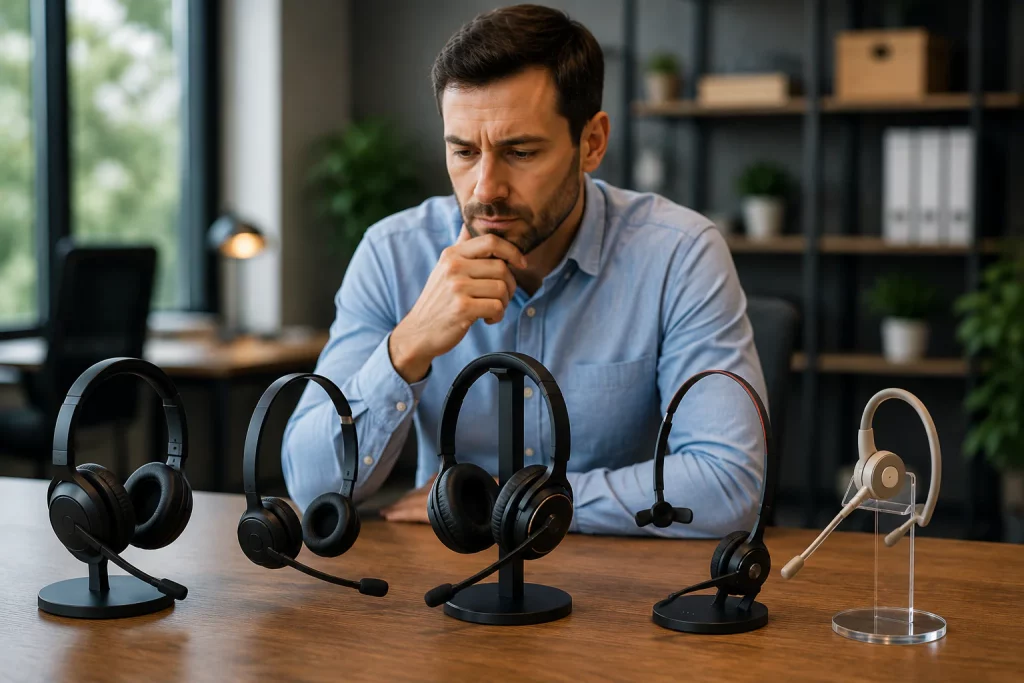
Call center headsets are no longer just accessories; they are critical business tools that directly affect customer experience, agent productivity, and operational efficiency. In modern BPO environments, remote work setups, and enterprise contact centers, the right headset can determine whether a conversation feels professional or frustrating.
Quick Definition
Call center headsets are professional audio devices designed for customer service agents and contact center teams to ensure clear voice communication, reduce background noise, and support long-hour usage with comfort and reliability.
Unlike regular headphones, they are engineered with specialized microphones, noise cancellation technologies, and enterprise compatibility features for platforms like Microsoft Teams, Zoom, and VoIP systems.
1. What Are Call Center Headsets?
Call center headsets are specialized communication devices designed for high-volume voice environments such as customer service centers, IT help desks, and BPO operations. They combine high-definition audio output with advanced microphones that filter background noise to ensure clear communication between agents and customers.
These headsets are optimized for:
- Long hours of daily use
- High call volumes
- Noisy office environments
- Remote work setups
They differ from consumer headphones because they prioritize voice clarity over music quality and are built for durability and enterprise compatibility.
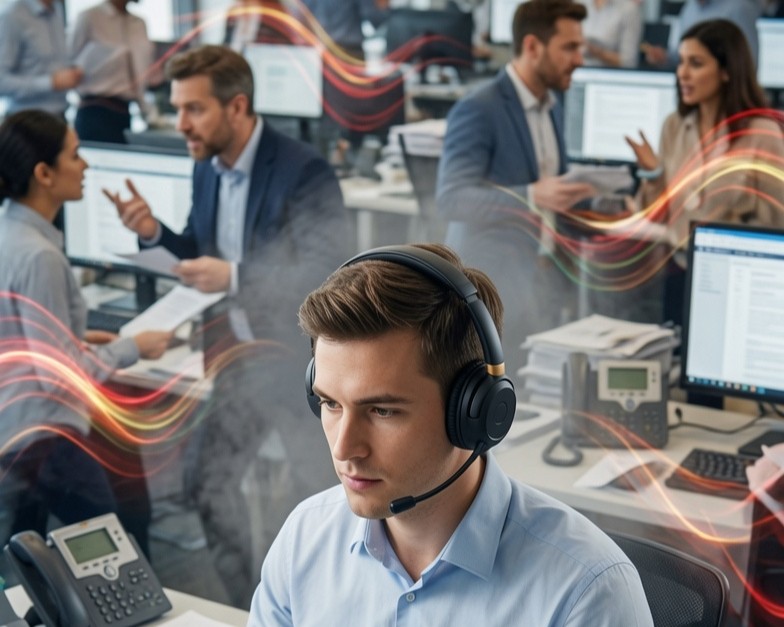
2. Why Call Center Headset Matters in Business Communications
Call center headsets directly influence customer satisfaction and operational efficiency. In a BPO or support center, even minor audio issues can lead to misunderstandings, longer call times, and reduced customer trust.
Why they are critical:
- Improve customer experience through clearer communication
- Reduce agent fatigue with ergonomic design
- Minimize background noise distractions
- Increase first-call resolution rates
- Enhance professionalism during calls
In industries like banking, telecom, and e-commerce, poor audio quality can lead to revenue loss and customer churn.
3. Key Features of a Professional Call Center Headset
When selecting a headset for customer service teams, certain features are non-negotiable.
3.1 Noise Cancelling Microphone
A call center headset with mic noise cancelling removes background sounds like typing, air conditioners, and office chatter.
3.2 Comfort for Long Hours
Agents often wear headsets for 6–10 hours daily. Look for:
- Lightweight design
- Soft ear cushions
- Adjustable headbands
3.3 Connectivity Options
- USB (most stable for office use)
- Bluetooth (flexibility for remote work)
- DECT (enterprise wireless stability)
3.4 Platform Compatibility
Modern headsets support:
- Microsoft Teams
- Zoom
- Google Meet
- VoIP systems
3.5 Durability
Call center environments require rugged equipment that can withstand daily use without performance loss.
4. Wired vs Wireless Call Center Headsets
Choosing between wired and wireless depends on workflow, budget, and mobility needs.
|
Feature |
Wired Headsets |
Wireless Headsets |
|
Stability |
Very high |
High |
|
Mobility |
Limited |
Excellent |
|
Battery |
Not required |
Required |
|
Cost |
Lower |
Higher |
|
Best for |
Office desks |
Hybrid/remote teams |
Wireless Call Center Headsets
A call center wireless headset with mic is ideal for agents who move between workstations or work remotely. It enhances productivity by removing cable restrictions.
5. Noise Cancellation Explained (ENC vs ANC)
Understanding noise cancellation is essential when choosing
a headset.
5.1 ENC (Environmental Noise Cancellation)
ENC focuses on microphone input, removing backgroundnoise from the speaker’s environment so the customer hears only the agent clearly.
5.2 ANC (Active Noise Cancellation)
ANC reduces what the user hears, blocking external sounds from reaching the agent’s ears.
Key difference:
- ENC = Improves what the customer hears
- ANC = Improves what the agent hears
Most best call center headset with noise cancelling microphone models prioritize ENC.
6. Best Call Center Headset for Work from Home
Remote work has increased demand for professional-grade headsets.
A good best headset for call center work from home should include:
- Strong Bluetooth connectivity
- Long battery life (8–30 hours)
- Noise cancelling microphone
- Compatibility with Zoom and Teams
Wireless models are preferred because they allow mobility during long shifts.
7. Top Brands: VT, Logitech, and Dell
8. How to Choose the Right Headset for Your Team
Selecting the right headset requires evaluating business needs rather than just price.
Step-by-step guide:
- Identify use case (office, remote, hybrid)
- Determine call volume per agent
- Choose wired or wireless
- Prioritize ENC for noisy environments
- Check platform compatibility
- Evaluate comfort for long shifts
- Consider total cost of ownership
For procurement managers, long-term durability often matters more than upfront cost.
9. Common Mistakes Buyers Make
Many businesses make costly mistakes when buying call center headsets.
Common errors:
- Choosing consumer headphones instead of enterprise headsets
- Ignoring microphone quality
- Overlooking comfort for long shifts
- Buying incompatible devices (Teams/VoIP mismatch)
- Focusing only on price instead of durability
These mistakes lead to poor agent performance and higher replacement costs.
10. Future Trends in Call Center Headsets
The headset industry is evolving rapidly with AI and cloud communication systems.
Key trends:
- AI-powered noise cancellation
- Smart voice enhancement
- Integration with CRM systems
- Health monitoring features for agents
- Cloud-managed headset fleets
- Increased adoption of wireless DECT systems
In the next few years, headsets will become intelligent communication devices rather than simple audio tools.
11. Comparison: Best Call Center Headsets
(Wired vs Wireless vs Brands)
Choosing the right call center headsets depends on performance needs, environment, and budget. Below is a practical comparison to guide procurement teams and IT managers.

11.1 Feature Comparison Table
Feature | VT Headsets | Logitech Headsets | Dell Headsets |
Price Range | Budget-friendly | Mid to premium | Mid-range |
Noise Cancellation | ENC supported | Advanced ENC + DSP | Standard ENC |
Comfort | Good | Excellent (enterprise-grade) | Good |
Durability | Moderate | High | High |
Wireless Options | Yes | Yes (strong ecosystem) | Limited |
Teams/Zoom Support | Yes | Certified models | Yes |
Best For | BPOs in Africa | Global enterprises | Corporate IT setups |
11.2 Wired vs Wireless Summary
Type | Best Use Case | Strength | Limitation |
Wired Headsets | Call centers with fixed desks | Stable connection | No mobility |
Wireless Headsets | Remote/hybrid agents | Flexibility | Battery dependency |
12. Best Practices for Call Center Headset Deployment
To maximize ROI from call center headsets wireless or wired systems, businesses should follow structured deployment strategies.
12.1 Standardization Across Teams
Use the same headset model across departments to reduce IT support complexity.
12.2 Train Agents on Proper Use
Agents should understand:
- Proper mic positioning
- Battery management (for wireless)
- Software integration (Teams/VoIP)
12.3 Prioritize Comfort Testing
Before bulk procurement, test headsets for:
- 6–8 hour wear comfort
- Heat buildup
- Ear pressure level
12.4 Maintain Equipment Lifecycle
Replace headsets every 18–36 months depending on usage intensity.
13. Common Mistakes to Avoid (Procurement Guide)
Many BPOs lose productivity due to avoidable headset decisions
Mistakes include:
- Buying consumer-grade headphones for call centers
- Ignoring ENC microphone quality
- Choosing Bluetooth-only devices for noisy offices
- Overlooking compatibility with CRM/VoIP systems
- Prioritizing cost over durability
A low-cost headset often becomes more expensive due to replacements and poor call quality.
14. Future of Call Center Headsets
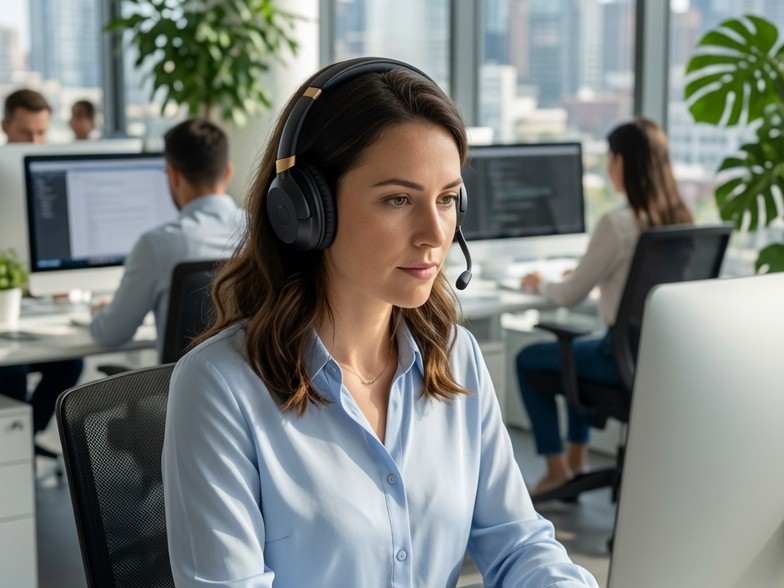
The next generation of call center headset with mic noise cancelling wireless systems is becoming smarter and more integrated.
14.1 AI Noise Suppression
AI will dynamically filter:
- Keyboard typing
- Traffic noise
- Background conversations
14.2 Cloud Device Management
IT teams will manage headset fleets remotely:
- Firmware updates
- Usage analytics
- Performance monitoring
14.3 Health & Ergonomics Features
Future headsets will include:
- Fatigue tracking
- Break reminders
- Posture support insights
14.4 Unified Communication Integration
Deep integration with:
- Microsoft Teams
- Zoom
- Google Meet
- CRM systems like Salesforce
15. KEY TAKEAWAYS
- Call center headsets are essential for business communication quality
- ENC microphones improve customer clarity significantly
- Wireless headsets support hybrid and remote teams
- Logitech suits enterprise performance needs
- VT is strong for cost-effective BPO deployments
- Dell is ideal for corporate IT environments
- Comfort and durability matter more than price alone
Conclusion
FAQs
1. What is a call center headset?
2. What is the best call center headset with noise cancelling microphone?
The best models are those with ENC technology from brands like VT, Logitech, and Dell, designed to eliminate background noise for clearer calls.
3. Are wireless call center headsets good?
Yes, wireless call center headsets are ideal for remote and hybrid work because they provide mobility and flexibility without cable restrictions.
4. What is the difference between ENC and ANC?
ENC removes background noise from the microphone side (what customers hear), while ANC reduces noise for the user wearing the headset.
5. Which headset is best for call center work from home?
A wireless headset with ENC, long battery life, and Zoom/Teams compatibility is best for remote call center work.
6. Do Logitech headsets work for call centers?
Yes, Logitech headsets are widely used in enterprise call centers due to their durability, audio quality, and Microsoft Teams certification.
Are VT headsets good for BPOs?
Yes, VT headsets are popular in African BPOs because they are affordable and offer reliable noise cancellation features.
8. How long do call center headsets last?
On average, a quality headset lasts 18–36 months depending on usage intensity and maintenance.
9. Can I use Bluetooth headsets for call centers?
Yes, but enterprise-grade Bluetooth or DECT headsets are recommended for stability and better call quality.
10. What features should a call center headset have?
Key features include ENC microphone, comfort padding, long battery life, platform compatibility, and durability.