

Table of Contents
ToggleIntroduction
Workplace communication has changed significantly.
Employees now move between phone calls, Microsoft Teams meetings, Zoom sessions, customer conversations and internal discussions throughout the day. At the same time, many businesses operate from open-plan offices, busy contact centres, shared workspaces or homes where background noise is difficult to avoid.
That creates a simple problem: even when the technology connects two people, noise can still get in the way of the conversation.
This is where noise cancelling headsets for work can make a difference.
A professional headset can help employees hear conversations more clearly while a noise-cancelling microphone can reduce unwanted sounds picked up during calls. For businesses, that can mean more professional customer interactions, fewer communication interruptions and a better experience for employees.
But how exactly does the technology work, and what should businesses consider before buying?
Let’s take a closer look.
Table of Contents
- Introduction
- What Are Noise-Cancelling Headsets for Work?
- Why Is Clear Communication Important in the Workplace?
- How Do Noise-Cancelling Headsets Improve Workplace Communication?
- What Is the Difference Between ANC and a Noise-Cancelling Microphone?
- Who Benefits Most From Noise-Cancelling Headsets?
- Wired vs Wireless Noise-Cancelling Headsets
- What Should You Look for When Choosing a Work Headset?
- VT, Logitech and Dell Headsets for Professional Use
- Common Mistakes When Buying Noise-Cancelling Headsets
- How Much Do Good Work Headsets Cost?
- Best Practices for Using Noise-Cancelling Headsets at Work
- Are Noise-Cancelling Headsets Worth It?
- The Future of Workplace Communication Headsets
- Conclusion
- FAQs
What Are Noise-Cancelling Headsets for Work?
Noise-cancelling headsets for work are professional audio devices designed to reduce unwanted environmental noise while supporting clear two-way communication. Depending on the model, they may use active noise cancellation, microphone noise reduction, acoustic isolation or a combination of these technologies.
Unlike ordinary headphones, a workplace headset is designed specifically for communication.
It typically combines:
- Speakers or earcups
- A built-in microphone
- Noise-reduction technology
- Wired or wireless connectivity
- Controls for calls and audio
- Features designed for extended use
The important distinction is that not all noise cancellation does the same thing.
ANC vs noise-cancelling microphones
| Technology | Main purpose |
|---|---|
| Active Noise Cancellation (ANC) | Reduces ambient noise heard by the wearer |
| Noise-cancelling microphone | Reduces unwanted sounds transmitted to the other person |
| Acoustic isolation | Physically blocks some surrounding sound |
| Echo cancellation | Helps prevent audio from being picked up and transmitted back |
For example, if an employee is sitting beside a colleague who is speaking loudly, ANC may help the employee hear their own conversation.
A noise-cancelling microphone, meanwhile, helps ensure the person on the other end of the call hears the employee more clearly.
Why Is Clear Communication Important in the Workplace?
Clear workplace communication helps employees exchange information accurately, collaborate effectively and provide better customer service. Poor audio quality can introduce misunderstandings, repeated questions and distractions, particularly when teams rely heavily on phone calls and online meetings.
Consider a customer-service agent dealing with a billing complaint.
The customer provides an account number. The agent mishears one digit because several employees are speaking nearby.
The agent asks the customer to repeat it.
The customer repeats it.
The agent still isn’t sure.
That may seem like a minor inconvenience, but multiply that interaction across hundreds of calls every day and the impact becomes much more significant.
Clear communication matters particularly for:
- Customer service
- Technical support
- Sales
- BPO operations
- IT help desks
- Remote teams
- Virtual meetings
- Healthcare administration
- Financial services
- Internal collaboration
A headset can’t solve every communication problem, but better audio equipment can remove one unnecessary source of friction.
How Do Noise-Cancelling Headsets Improve Workplace Communication?
Noise-cancelling headsets improve workplace communication by reducing distractions, supporting clearer speech and helping employees concentrate on conversations. Their greatest value appears in noisy environments where background conversations, equipment and other sounds can interfere with calls and meetings.
1. They reduce background distractions
A busy office can contain dozens of competing sounds.
Phones ring. Colleagues talk. Printers operate. Air-conditioning systems run. People walk around.
Noise cancellation can reduce some of these distractions and make conversations easier to follow.
This is particularly useful in open-plan offices and contact centres.
2. They improve microphone performance
A headset microphone sits much closer to the speaker than a laptop’s built-in microphone.
That alone can provide a more controlled audio experience.
When microphone noise reduction is added, the headset can process the incoming audio and attempt to distinguish the speaker’s voice from unwanted environmental sound.
3. They make virtual meetings easier to follow
Remote and hybrid workers often participate in meetings from less-than-perfect environments.
Someone might be working from:
- A home office
- A bedroom
- A shared workspace
- A hotel
- A temporary office
- A busy household
A suitable headset can help the employee focus on the meeting and communicate without relying entirely on the computer’s built-in speakers and microphone.
4. They support better customer interactions
Customer-facing employees represent the business every time they speak with a customer.
Poor audio can make an otherwise professional employee sound unprepared.
Clear audio, on the other hand, allows the conversation to focus on the actual issue.
5. They can reduce communication interruptions
“Can you repeat that?”
“Sorry, I didn’t hear you.”
“There’s too much noise on your side.”
These phrases are common during poor-quality calls.
Better audio equipment can’t eliminate them entirely, but it can reduce some of the technical and environmental reasons they occur.
What Is the Difference Between ANC and a Noise-Cancelling Microphone?
ANC reduces unwanted sounds that the headset wearer hears, while a noise-cancelling microphone works on the sound being transmitted to the other person. Both can be useful at work, but they solve different problems and should not be treated as interchangeable features.
Here’s the easiest way to remember it:
ANC helps you hear. A noise-cancelling microphone helps others hear you.
Imagine you’re working in a noisy call centre.
Your colleague beside you is talking to their own customer.
Without ANC
You may hear your colleague’s conversation while speaking with your customer.
With ANC
Some of that surrounding noise may be reduced for you.
Now reverse the situation.
Your customer is listening to you.
Without microphone noise cancellation
Your customer’s experience may include more of the surrounding office noise.
With microphone noise cancellation
The headset can process your microphone input to reduce unwanted background sounds.
This is why businesses should look for the right combination of technologies, rather than assuming that any headset labelled “noise cancelling” will solve every workplace audio problem.
Who Benefits Most From Noise-Cancelling Headsets?
Noise-cancelling headsets are particularly valuable for employees who spend significant time communicating through calls or online meetings in environments with background noise. BPOs, call centres, IT support teams, customer service departments and hybrid workers are among the groups most likely to benefit.
BPOs and call centres
For BPOs and contact centres, communication is the core of the operation.
Employees may spend most of their working day:
- Answering calls
- Making outbound calls
- Handling complaints
- Providing technical support
- Conducting surveys
- Processing customer requests
For these teams, microphone quality deserves serious attention.
IT teams
IT professionals frequently use remote support tools, VoIP systems and virtual meetings.
Clear audio is especially useful when troubleshooting technical issues verbally.
Procurement managers
Procurement teams need to consider more than the price of each headset.
They should evaluate:
- Durability
- Compatibility
- Warranty
- Comfort
- Connectivity
- Microphone quality
- Replacement costs
Remote and hybrid workers
For employees working from home, a headset can provide a more controlled communication environment than relying on a laptop’s integrated microphone and speakers.
Wired vs Wireless Noise-Cancelling Headsets
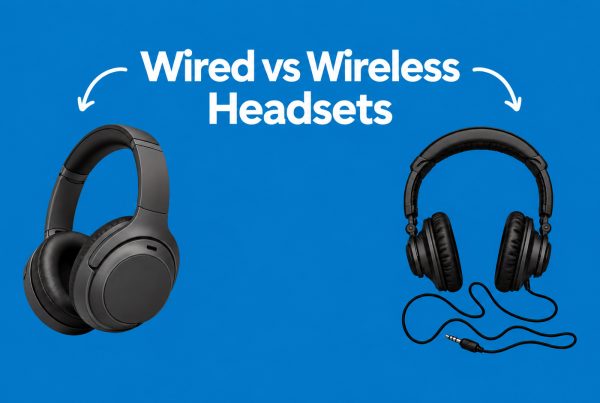
Wired and wireless headsets can both work well in professional environments. Wired models are often ideal for fixed workstations because they do not require battery charging, while wireless models offer greater freedom of movement. The better choice depends on how and where employees work.
Wired headsets
Wired models can be particularly practical for fixed desks.
Advantages:
- No battery charging
- Consistent connection
- Straightforward deployment
- Often simple to troubleshoot
- Suitable for dedicated call-centre workstations
Wireless headsets
Wireless models provide greater flexibility.
Advantages:
- Freedom to move
- Less cable clutter
- Useful for hybrid work
- Suitable for managers and mobile employees
- Can connect to multiple devices on some models
Comparison
| Feature | Wired | Wireless |
|---|---|---|
| Fixed desk | Excellent | Good |
| Mobility | Limited | Excellent |
| Battery required | No | Yes |
| Cable management | Required | Minimal |
| Call-centre deployment | Excellent | Excellent |
| Flexible workspace | Good | Excellent |
The correct choice depends on the workflow rather than simply whether one technology is newer.
What Should You Look for When Choosing a Work Headset?
The best work headset should match the user’s environment, communication platform and daily workload. Businesses should consider microphone quality, comfort, connectivity, compatibility, durability and noise-reduction capabilities before purchasing, particularly when deploying headsets across a large team.
1. Microphone quality
For customer-facing employees, microphone performance should be one of the first specifications you investigate.
Look for:
- Noise-cancelling microphone
- Good microphone positioning
- Echo cancellation
- Clear voice transmission
- Appropriate microphone pickup
2. Comfort
If employees wear a headset for six or eight hours, comfort becomes a productivity issue.
Consider:
- Weight
- Ear cushion material
- Headband design
- Adjustability
- Clamping pressure
3. Connectivity
Check whether the headset supports your current equipment.
Common options include:
- USB
- Bluetooth
- 3.5 mm
- RJ9
- DECT
4. Compatibility
Before buying in bulk, verify compatibility with your:
- PCs
- Desk phones
- VoIP systems
- Softphones
- Microsoft Teams
- Zoom
- Unified communications platform
5. Durability
For a large organisation, headset replacement can become expensive.
A headset used every working day should be evaluated for durability rather than treated like an occasional-use consumer accessory.
VT, Logitech and Dell Headsets for Professional Use
VT, Logitech and Dell each offer professional headset options, but the right choice depends on the specific model and workplace requirements. Businesses should compare microphone technology, connectivity, comfort and compatibility rather than choosing a brand based solely on reputation.
VT headsets
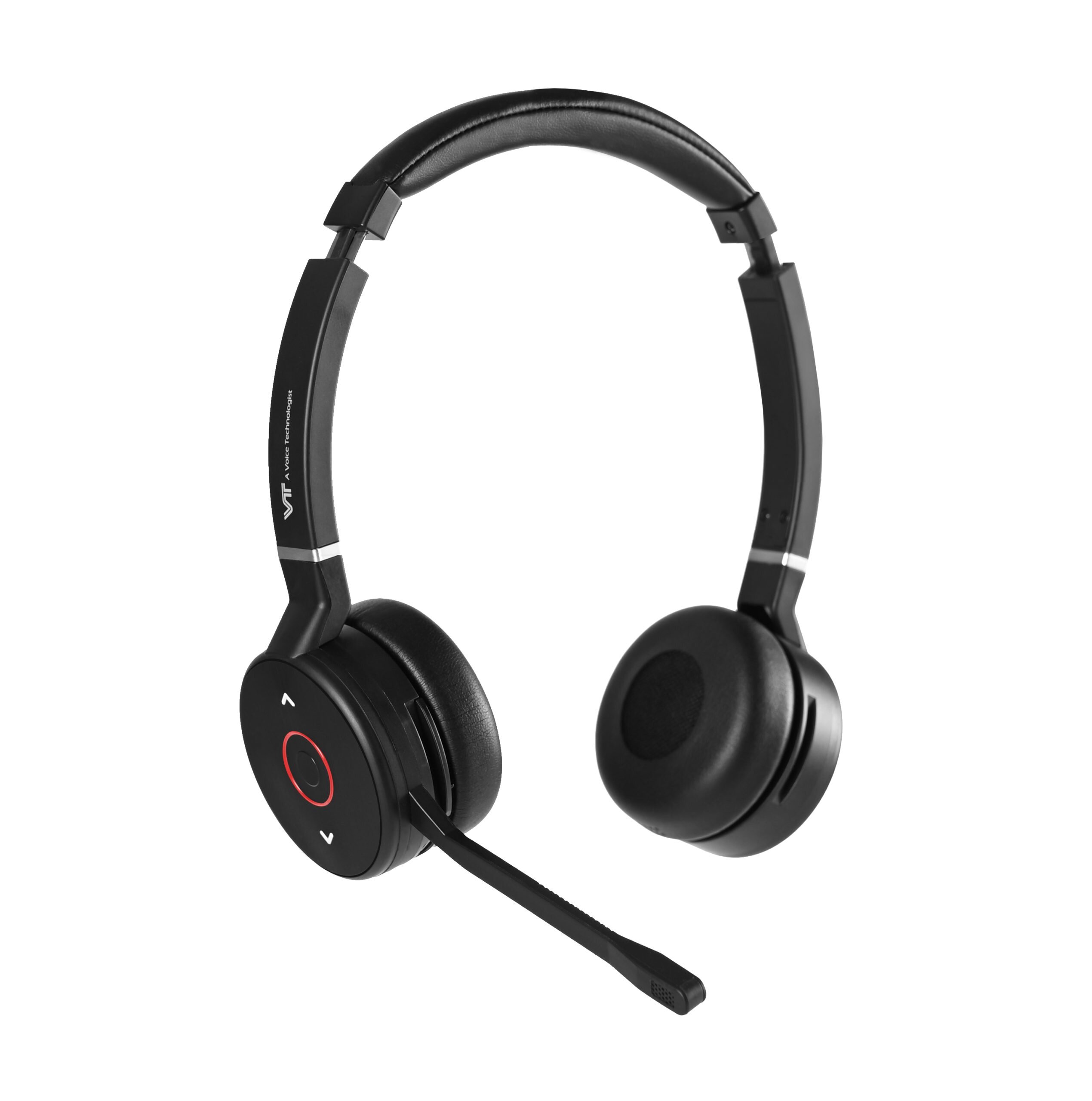
VT offers professional communication headsets designed for business environments.
Promallshop’s current range includes models such as the VT 6300 USB Headset with Dual Noise-Cancelling Microphones and the VT Flow Wireless ANC Bluetooth Headset.
The VT range is particularly relevant when you’re looking for dedicated professional communication equipment rather than general-purpose headphones.
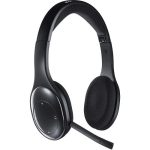
Logitech headsets
Logitech has a broad business headset portfolio.
Its professional models include wired USB headsets as well as wireless solutions.
For example, the Logitech H650e incorporates a noise-cancelling microphone, acoustic echo cancellation and digital signal processing. (Logitech)
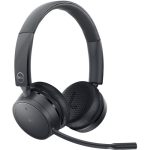
Dell headsets
Dell also offers professional audio solutions for workplace communication, including wired and wireless models.
Its portfolio includes headsets designed around features such as active noise cancellation and microphone noise reduction. (Dell)
Which brand is best?
There isn’t one answer.
Instead, match the headset to the use case.
| Requirement | What to prioritise |
|---|---|
| Busy call centre | Noise-cancelling microphone |
| Quiet office | Clear microphone + comfort |
| Remote worker | Wireless/Bluetooth |
| Fixed workstation | Wired USB |
| Mobile manager | Wireless |
| Long shifts | Lightweight construction |
| Large deployment | Durability + compatibility |
Common Mistakes When Buying Noise-Cancelling Headsets
Businesses often make headset purchasing decisions based on price or brand alone. Other common mistakes include confusing ANC with microphone noise cancellation, ignoring compatibility and failing to test comfort. Avoiding these issues can help organisations choose equipment that works effectively in real workplace conditions.
Mistake 1: Choosing the cheapest headset
The cheapest option may not provide the best value.
Consider the total cost of ownership, including replacement and support.
Mistake 2: Assuming “noise cancelling” means silent
Noise cancellation has limitations.
Different technologies work differently, and performance varies by model and environment.
Mistake 3: Confusing headphones with headsets
A headphone may provide excellent listening quality but have a microphone that isn’t designed for professional calls.
If communication is the priority, microphone performance matters.
Mistake 4: Ignoring compatibility
Always test the headset with your actual devices and communication software.
Mistake 5: Forgetting employee comfort
A technically excellent headset that employees dislike wearing isn’t a successful workplace solution.
How Much Do Good Work Headsets Cost?
The cost of a professional work headset varies according to its microphone technology, connectivity, brand, comfort, durability and wireless features. Businesses should compare total value rather than choosing solely by purchase price, particularly when buying equipment for large teams.
For example, current Nigerian headset listings cover a wide price range.
RapidBTS currently lists professional call-centre headsets ranging from lower-cost models to premium wireless business systems. (RapidBTS)
Promallshop similarly offers headset options across different price and feature categories.
For procurement managers, the better question isn’t:
“What’s the cheapest headset?”
It’s:
“Which headset provides the right combination of communication quality, comfort, reliability and cost for our employees?”
Best Practices for Using Noise-Cancelling Headsets at Work
Getting the most from noise-cancelling headsets requires more than purchasing the equipment. Businesses should select models based on their environment, test them before large deployments, train employees to position microphones correctly and maintain the equipment properly.
Follow these five steps:
1. Identify the noise problem
Is the environment affected by:
- Nearby conversations?
- Machinery?
- Traffic?
- Office equipment?
- Household noise?
The answer influences the headset you need.
2. Identify the communication system
Determine whether your employees use:
- Desk phones
- PCs
- VoIP
- Microsoft Teams
- Zoom
- Other UC platforms
3. Test before buying in bulk
Give employees several models to test.
Listen to the microphone from the other side of a real call.
4. Standardise where possible
A consistent headset fleet makes IT support and replacements easier.
5. Maintain the equipment
Keep microphones and ear cushions clean, inspect cables and replace damaged components.
Are Noise-Cancelling Headsets Worth It?
Noise-cancelling headsets are generally worth considering when employees regularly work in noisy environments or depend heavily on voice communication. The value is strongest when improved audio quality, employee concentration and professional customer interactions justify the additional cost over basic headsets.
For a company with five employees, the decision is relatively simple.
For a BPO with 500 agents, it becomes a procurement strategy.
The calculation should consider:
Purchase price + replacement costs + employee usability + compatibility + expected lifespan
rather than purchase price alone.
The Future of Workplace Communication Headsets
Workplace headsets are becoming increasingly sophisticated, with developments in AI-assisted audio processing, improved wireless connectivity, microphone noise reduction and integration with unified communications platforms. These technologies are likely to make headsets an increasingly important part of modern workplace communication systems.
The traditional headset simply connected an employee to a phone.
Modern headsets can connect employees to an entire communication ecosystem.
They may support:
- Multiple devices
- Bluetooth
- USB connectivity
- UC platforms
- AI-assisted microphone processing
- Advanced noise reduction
- Wireless mobility
This is particularly relevant as businesses continue adopting hybrid working arrangements.
For organisations operating across Nigeria, Ghana, Côte d’Ivoire and other markets, workplace communication equipment will increasingly need to work across different environments and connectivity setups.
Conclusion
Noise cancelling headsets for work can improve workplace communication by reducing distracting background noise and helping employees hear and transmit speech more clearly. They are particularly useful in open-plan offices, call centres, BPOs, remote-work environments and other workplaces where background noise can interfere with conversations.
Noise cancelling headsets for work can be a practical investment for organisations where clear communication matters. The biggest benefits come from reducing distractions, improving microphone performance and giving employees suitable equipment for their working environment.
Before purchasing, remember:
- Understand the difference between ANC and microphone noise cancellation.
- Prioritise microphone quality for customer-facing employees.
- Choose wired or wireless based on workflow.
- Check compatibility before bulk procurement.
- Consider employee comfort.
- Test products in real workplace conditions.
- Think about total cost of ownership.
- Choose the technology that solves your actual communication problem.
FAQs
Yes. Noise cancelling headsets can be particularly useful in noisy offices, call centres, BPOs and home-working environments because they can reduce distractions and support clearer communication.
The best model depends on the environment, communication platform, connectivity requirements, budget and how long employees wear the headset. There is no single model that is ideal for every workplace.
They can. Noise reduction can make conversations easier to hear, while noise-cancelling microphones can help reduce unwanted sounds transmitted during calls.
ANC primarily reduces sound heard by the headset wearer. A noise-cancelling microphone processes the user's voice to reduce unwanted background sound transmitted to the other person.
Yes. They are particularly useful where employees regularly deal with nearby conversations and other environmental noise.